
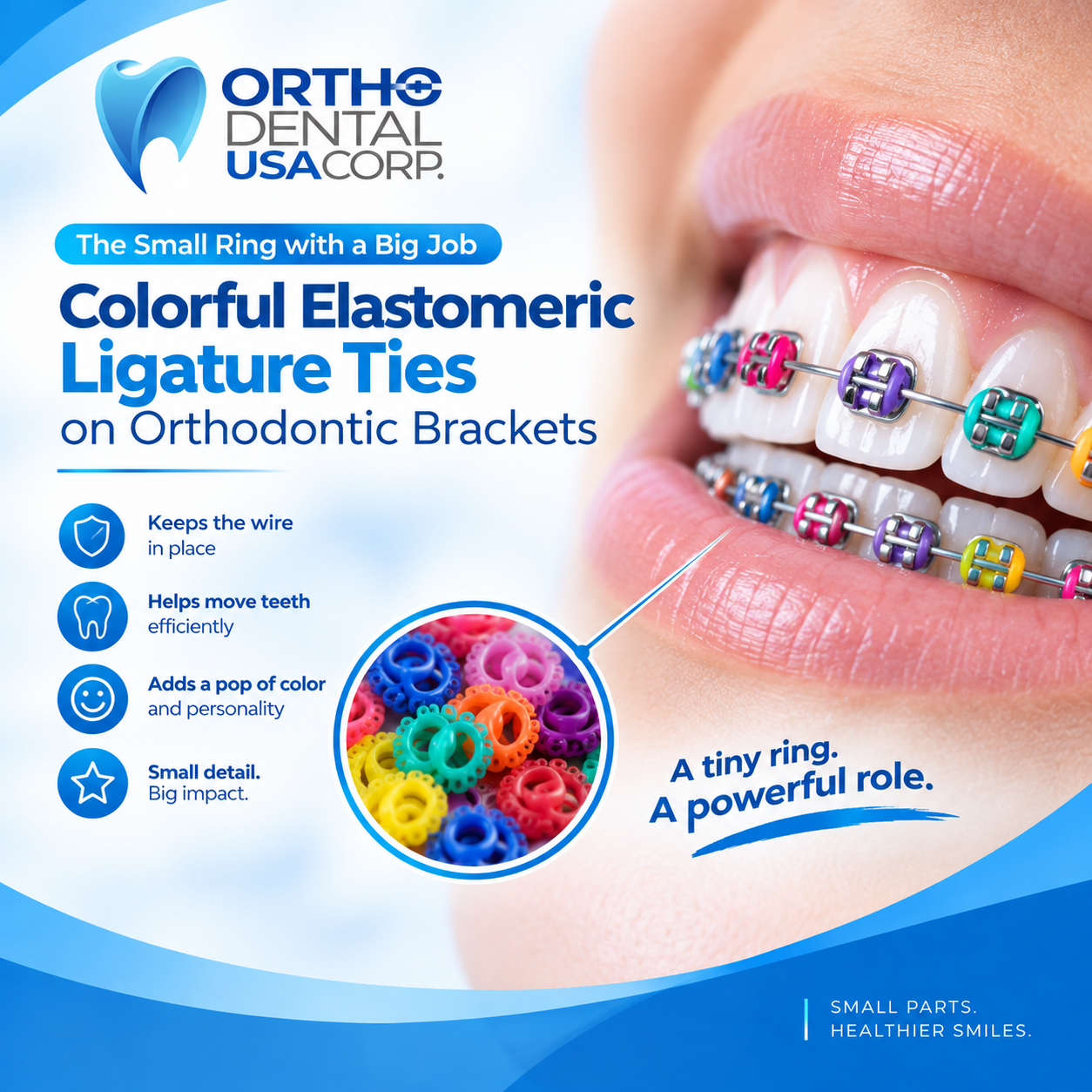
The Tiny Rubber Ring That Does More Work Than You Think
It’s easy to overlook. It costs a fraction of a cent. It takes about two seconds to place. And yet the humble elastomeric ligature tie—that small rubber ring wrapped around every bracket on a traditional set of braces—quietly does more work than almost any other part of the appliance. Let’s give it the attention it deserves.
What Exactly Is a Ligature Tie?
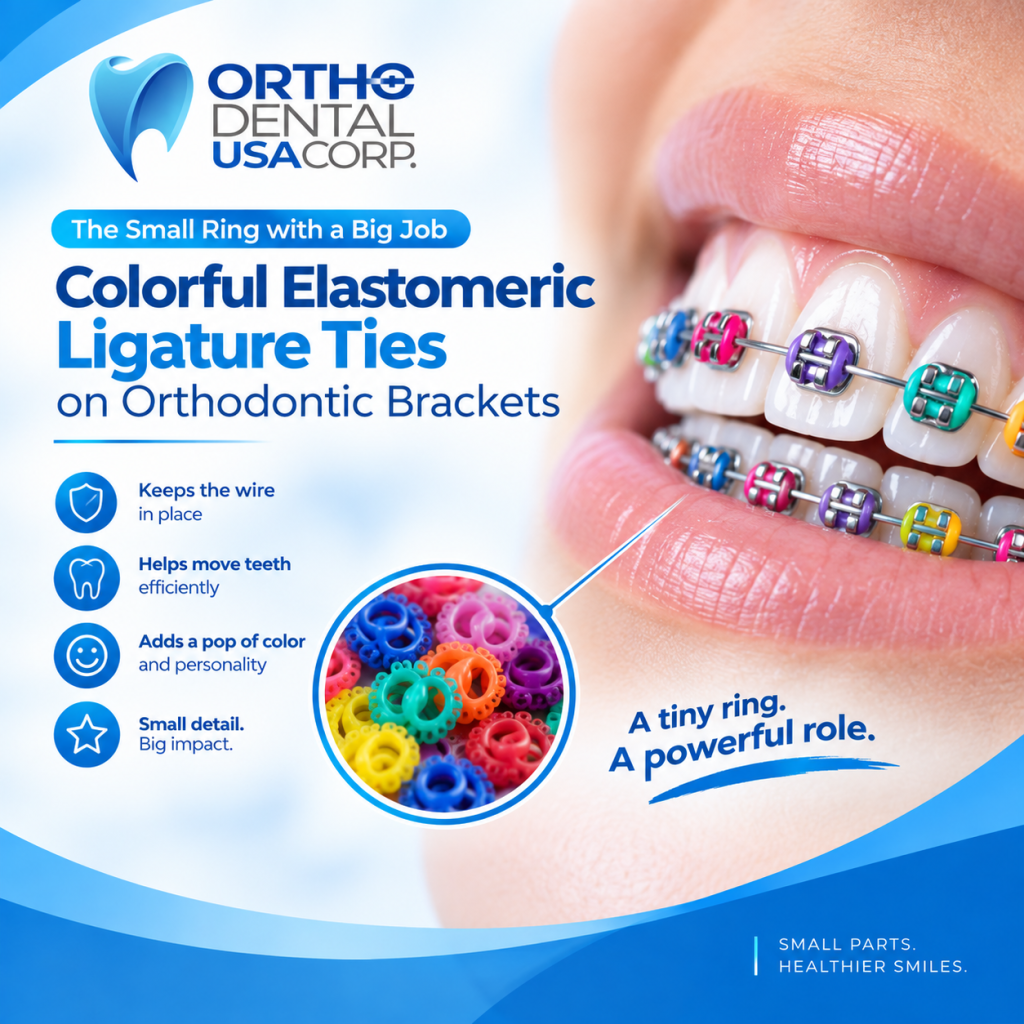
A ligature tie is the small elastic (or, less commonly, metal wire) loop that holds the archwire securely inside the bracket slot. Without it, the wire would simply sit loose—no pressure, no tooth movement, no treatment progress. On a traditional (non self-ligating) bracket system, it’s the ligature doing the real mechanical work of keeping everything locked together between visits.
They come in dozens of colors, from clear and “tooth-colored” for patients who want a subtle look, to neon greens and glow-in-the-dark shades for patients who very much do not.
The Job Nobody Talks About: Managing Friction
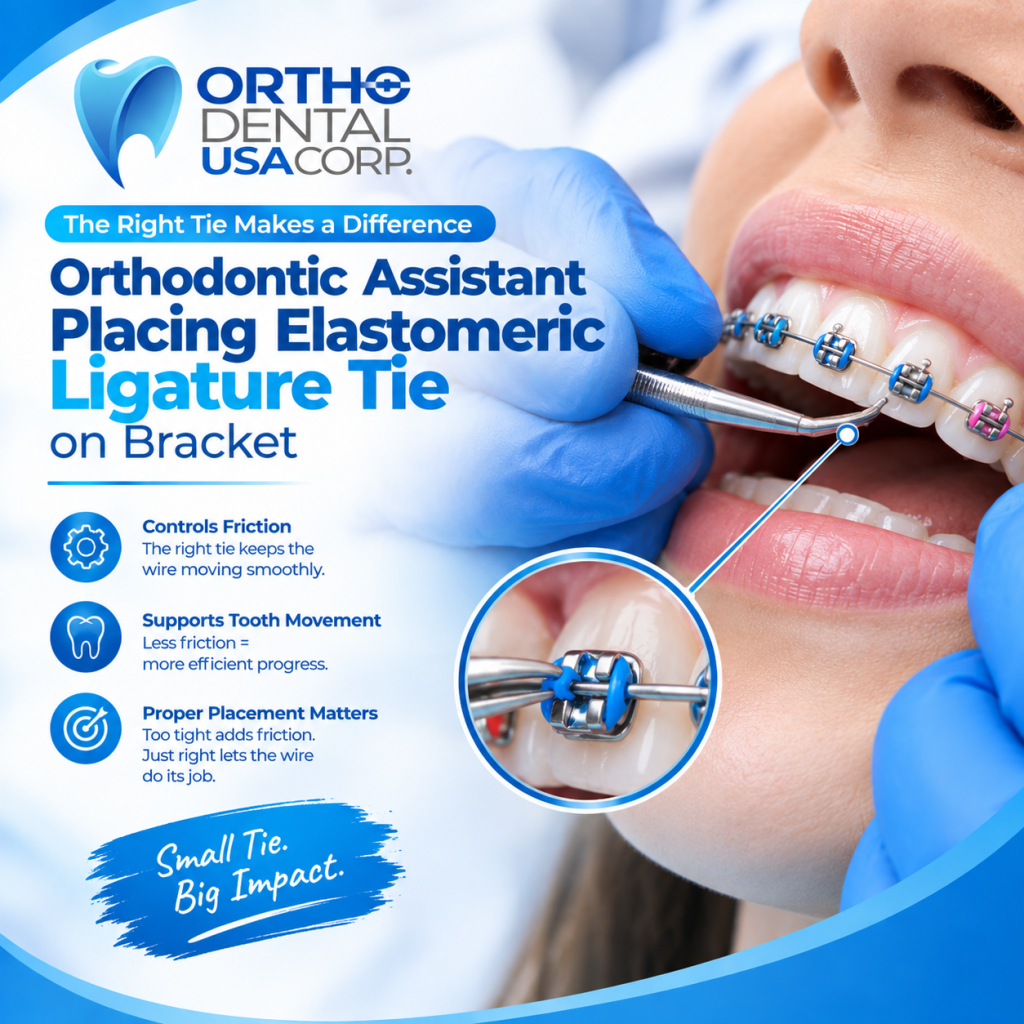
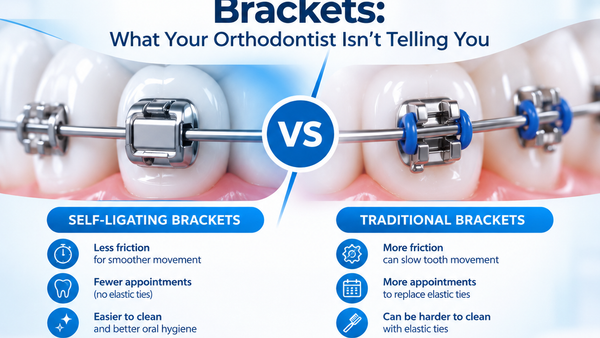
Beyond simply holding the wire in place, ligature ties play a direct role in how much friction exists between the wire and the bracket—which affects how smoothly teeth slide along the arch. Tie them too tight, and you add unnecessary friction that can slow tooth movement. The right ligature, placed correctly, lets the wire do its job without fighting against it.
This is one of those details that separates a well-run practice from one that’s just going through the motions: consistent, correct ligature placement, visit after visit, adds up to smoother treatment overall.
Hygiene: The Trade-Off Nobody Mentions at Checkout
Here’s the part that doesn’t make it into the sales pitch: ligature ties, precisely because they wrap around the bracket, create more surface area where plaque and food debris can hide. Patients with traditional ligated braces often need a bit more reminding—and a bit more product, like proxy brushes—to keep things clean between adjustments.
This isn’t a reason to avoid traditional brackets. It’s just a maintenance reality worth setting expectations around at the very first appointment, so patients aren’t caught off guard six weeks in.
Choosing the Right Ligature Ties for Your Practice
Not all ligature ties are created equal, and the differences matter more than they might seem:
- Standard elastomeric ties — the everyday choice, reliable and available in a full color range.
- Reinforced or high-strength ties — hold up better in cases needing extra retention force.
- Clear/tooth-colored ties — popular with adult patients who want a lower-profile look, though they can discolor faster than other shades.
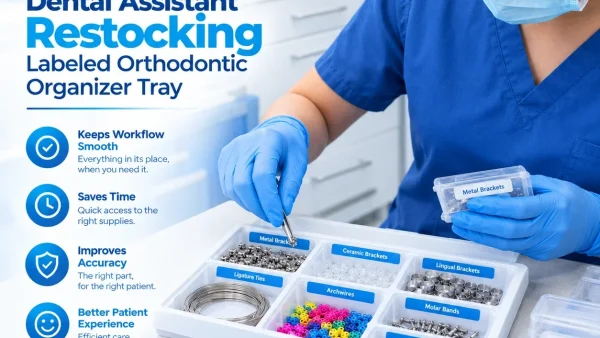
- Power chains (connected ligatures) — used to close spaces rather than simply hold a wire, worth stocking separately from single ties.
Stocking a solid rotation of colors isn’t just a nice-to-have—it’s often the small detail patients remember most fondly about their treatment, especially younger ones who look forward to picking a new color every visit.
Why This Small Detail Is Worth Getting Right
It would be easy to treat ligature ties as an interchangeable commodity—buy whatever’s cheapest, restock when you run low, move on. But consistent quality here shows up in ways patients and staff both notice: fewer ties snapping mid-treatment, more predictable friction control, and a color selection that keeps patients (especially the younger ones) genuinely excited to come back for their next adjustment.
Sometimes the smallest part of the appliance says the most about how a practice runs.
Frequently Asked Questions
How often do ligature ties need to be replaced? Typically at every adjustment visit, roughly every 4–8 weeks, since the elastic material loses some of its tension and can discolor over time.
Do colored ligature ties affect treatment differently than clear ones? No—color is purely cosmetic and doesn’t change how the tie functions mechanically. The choice is about patient preference, not clinical performance.
Can ligature ties cause an allergic reaction? It’s rare, but latex-based ties can be a concern for patients with a latex sensitivity. Most practices now stock latex-free elastomeric options as a standard precaution.

Leave a comment