
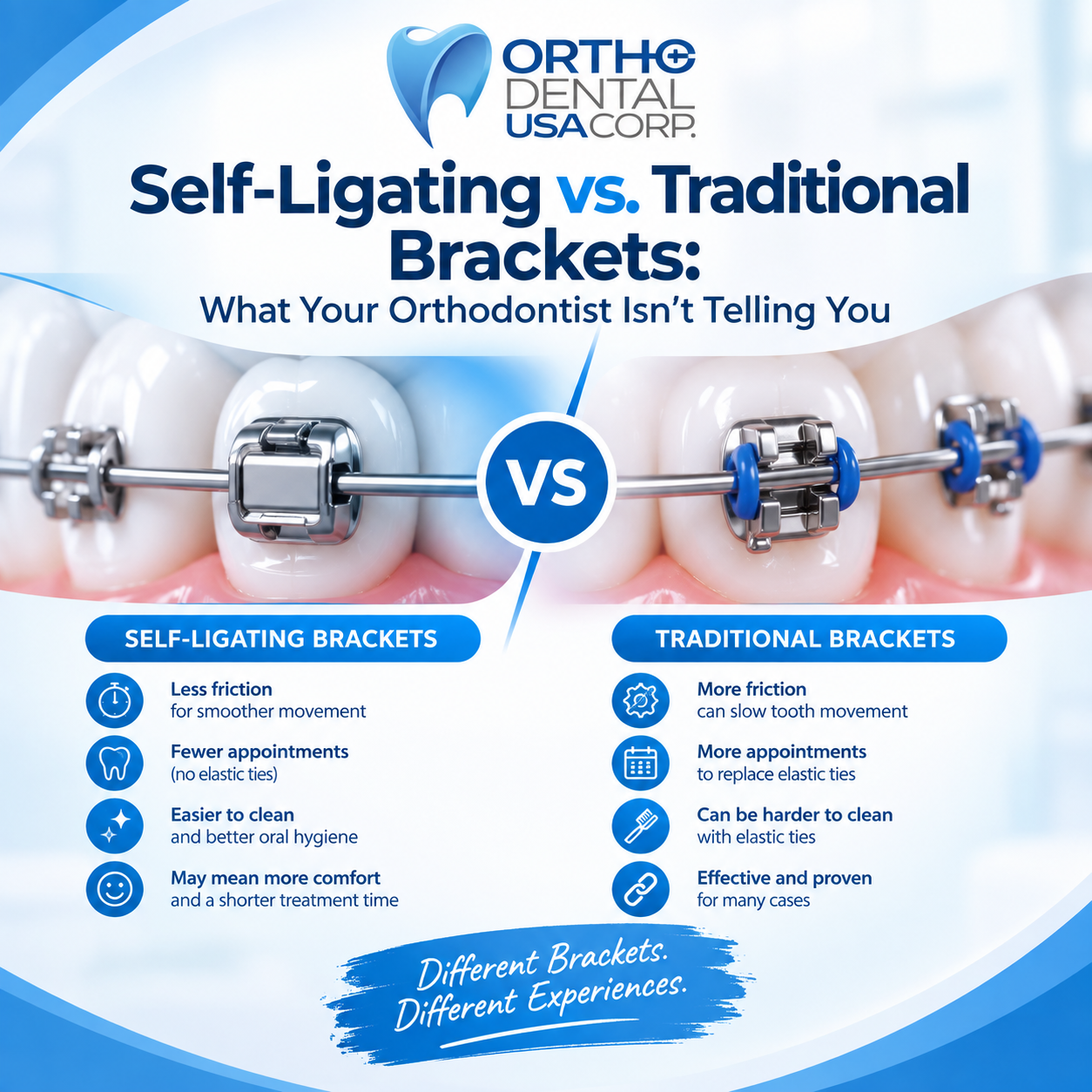
Self-Ligating vs. Traditional Brackets: What Your Orthodontist Isn’t Telling You
Ask ten orthodontists which bracket system is “better,” and you’ll get ten different answers—usually followed by a long pause and “well, it depends.” That’s not a dodge. It’s the truth. But it also means most patients (and even some newer clinicians) never get a straight, honest comparison. Let’s fix that.
Two Systems, One Job: Holding the Wire
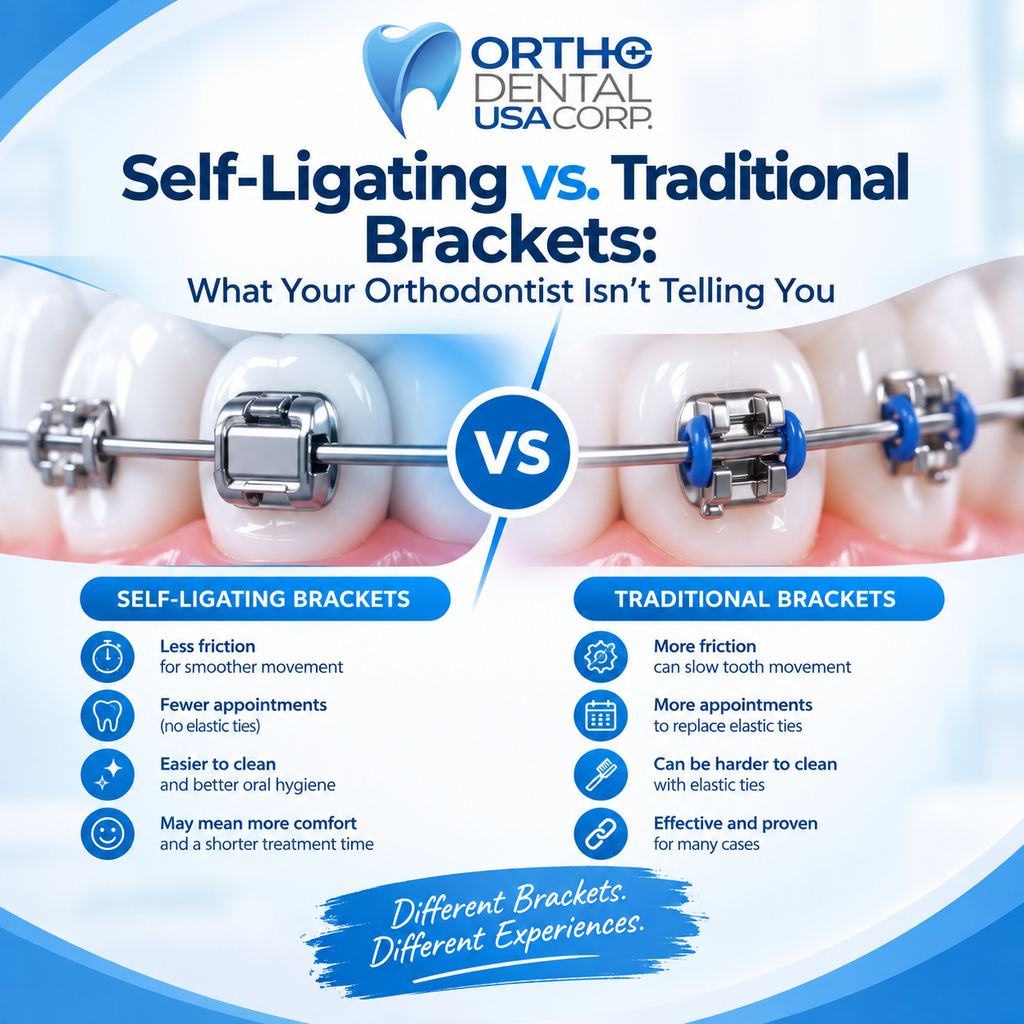
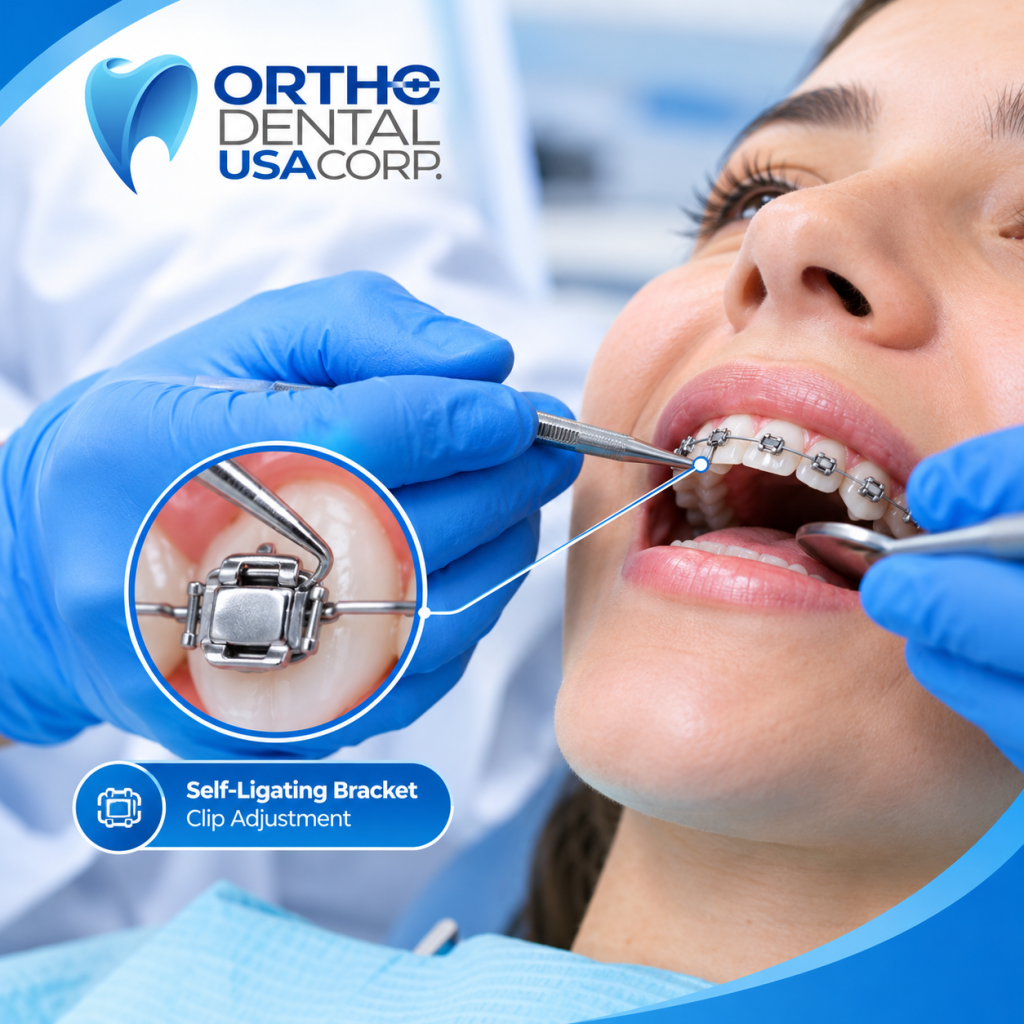
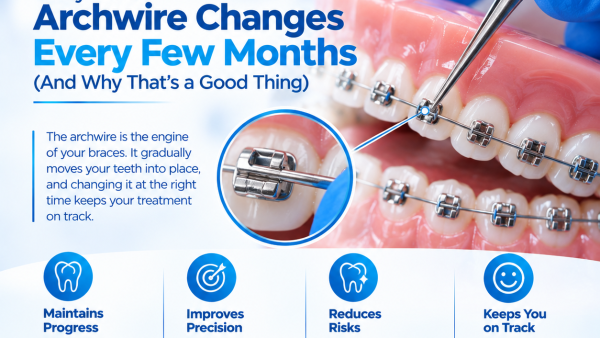
Every bracket has one core mission: hold the archwire firmly enough to move teeth, but not so tightly that it stops the wire from doing its job. Traditional brackets do this with tiny elastic or metal ties that get replaced at every visit. Self-ligating brackets skip the ties entirely, using a built-in clip or sliding door that locks the wire in place on its own.
Within self-ligating systems, there’s a further split worth knowing:
- Active self-ligating brackets use a spring clip that presses directly against the wire, adding a bit of extra force.
- Passive self-ligating brackets use a sliding door that holds the wire without pressing on it, which some clinicians prefer for lower-friction movement early in treatment.
It sounds like a small mechanical difference. In practice, it changes almost everything about the appointment.
The Difference You’ll Actually Notice: Time
Here’s the part that surprises people: the biggest difference isn’t really about the brackets themselves—it’s about time. No ligatures to remove and replace means shorter adjustment visits, sometimes by several minutes each. Multiply that across a full schedule of 15–20 patients a day, and self-ligating systems can free up real, bookable time in a busy practice.
Comfort and Hygiene: The Everyday Difference Patients Feel
There’s also a friction factor. Less resistance between the wire and the bracket can mean a smoother, sometimes more comfortable ride during the sliding phase of treatment—though “comfortable” is relative when we’re talking about moving teeth through bone. And because there’s no elastic tie to trap plaque, self-ligating brackets tend to stay a little cleaner between visits, which patients (and their parents) genuinely notice at the six-week mark.
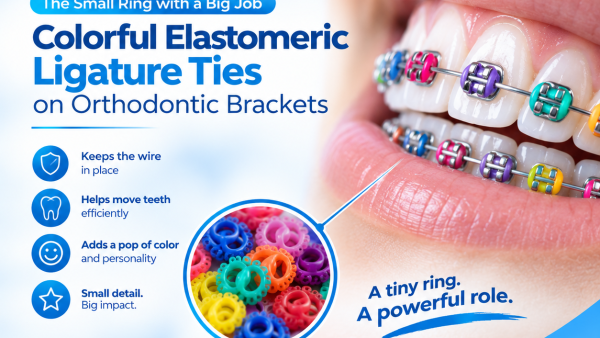
But traditional brackets aren’t the “old” option collecting dust. Colored ties are still a favorite with younger patients who treat their braces like an accessory, swapping colors for every holiday and school event. The system also remains dependable, extremely well-studied over decades of clinical use, and typically more budget-friendly to stock.
Cost and Inventory: The Part That Affects Your Practice, Not Just the Patient
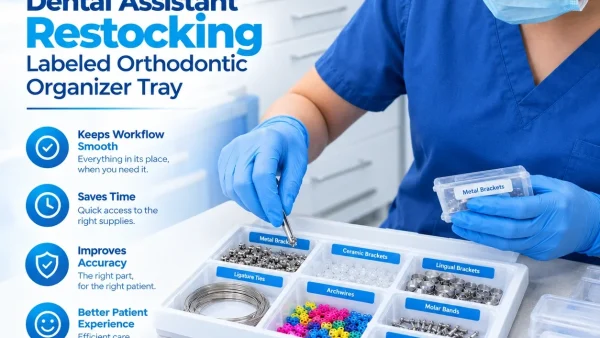
Self-ligating brackets usually carry a higher per-unit cost than traditional brackets. But practices can offset that with lower ongoing consumable use—no ligatures to keep restocking in a dozen colors. Traditional systems, on the other hand, need a steady supply of elastomeric ties plus the tools to place them, but the brackets themselves are typically cheaper and the learning curve for new staff is shorter.
When you’re planning inventory, the real question isn’t “which is cheaper per unit”—it’s “which fits how this practice actually runs.” Order frequency, storage space, and how much your patients care about color customization all factor into that math more than the sticker price does.
So Which One Wins?
Neither—and that’s the honest answer. Most practices end up using both, choosing case by case. Self-ligating shines when speed and reduced friction matter most, especially in high-volume practices watching the clock. Traditional brackets hold their own when cost, color options, or an established clinical workflow make more sense for the case in front of you.
The real decision isn’t “which is objectively better.” It’s “which fits this patient, this case, this week’s schedule.” Having reliable stock of both means you’re never the one making that call based on what’s left in the drawer.
Frequently Asked Questions
Do self-ligating brackets really shorten treatment time?
Not dramatically on their own—the total treatment timeline depends more on the case itself than the bracket system. What self-ligating brackets do reliably shorten is chair time per adjustment visit, not necessarily the overall months of treatment.
Are self-ligating brackets more expensive for patients?
It varies by practice and case, but self-ligating systems can carry a modest premium tied to the bracket cost itself. Some practices absorb this into a flat treatment fee rather than itemizing it.
Can a practice switch between systems mid-treatment?
Generally, no—switching bracket systems mid-case adds complexity and cost without real benefit. Most clinicians choose one system per case at the start of treatment and stick with it.
Do you need to stock up on brackets—whether self-ligating or conventional? Explore our category of Brackets or request a Price VIP for frequent orders.
Become a VIP Client & Access Exclusive Pricing
Join our VIP Client Program and access special pricing on orthodontic instruments and ligature cutters.
Apply here:
Leave a comment